
And the hardworking bees ...
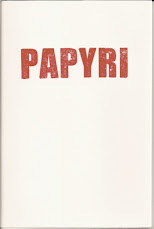
The poem this collaboration was based on was discovered among the Tebtunis papyri sometime in the early twentieth century. These papyri fragments were (according to Wikipedia):… written in either Demotic Egyptian or Koine Greek and were found during a single expedition led by Bernard Pyne Grenfell and Arthur S. Hunt, two British papyrologists in the winter of 1899/1900 at the village of ancient Tebtunis (near modern Umm-el-Baragat), Egypt. The papyri can be divided into three groups based on their provenance: texts from the crocodile mummies, the town and from the temple of Soknebtunis, and the cartonnage of human mummies. A total of 1093 fragments of the Tebtunian papyri are registered ...Most of them have been dated to sometime between the 3rd and 1st century BCE.
This particular piece was translated into Italian by poet and classicist – and future Nobel Prize winner – Salvatore Quasimodo, and included in his wartime collection Lirici Greci [Greek Lyrics] (1940):Salvatore Quasimodo. Lirici Greci: Testo Greco a fronte. 1940. Saggio di Luciano Anceschi. 1944. Biblioteca Moderna Mondadori clxxxix. Verona: Arnoldo Mondadori Editore, 1951. pp. 152-53.It originally formed the final section of a longer poem, which Quasimodo includes in full in his notes (pp.164-65):

E le docili api laboriose
dall’ali gialle, dal viso schiacciato,
le folte operaie dell’estate
che lasciano le pungiglione cupamente ronzando,
le costruttrici dagli amori luttuosi,
indifese succhiano il soave nettare
dal quale si ricava il miele.
And the hardworking bees
yellow wings and pinched faces
busy all summer long
buzz as they plant their stings
in the labyrinths of love
sipping the clear sweet nectar
from which the honey comes
– trans. Jack Ross
(25-27/7/26)

•


.jpg)
No comments:
Post a Comment